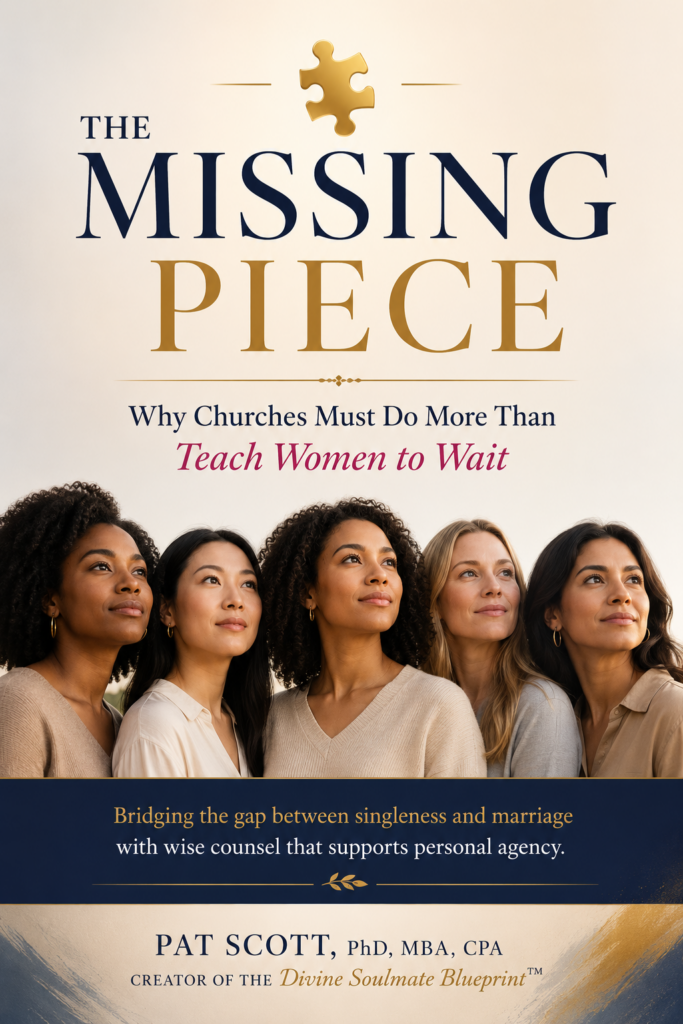
For generations, the church has taught women how to live faithfully before marriage and how to become godly wives within marriage. We have taught prayer, chastity, patience, character, and trust in God. These teachings matter.
However, somewhere between singleness and marriage, a critical piece has gotten lost.
We have taught women how to wait for marriage and how to prepare for marriage, but we have not taught them nearly as intentionally how to create opportunities, attract, discern, and choose the person with whom they might actually build that marriage.
That gap matters because the world around marriage has changed. People are marrying later, but the desire for marriage has not disappeared. Among unmarried Gen Z and Millennials, 78% and 73%, respectively, say they hope
to marry someday.¹ (Barna Group)
An analysis of Pew Research Center’s 2014 Religious Landscape Study found that unmarried women—including never-married, divorced, separated, and widowed women—represented **40% of Catholic women, 42% of evangelical Protestant women, 45% of mainline Protestant women, and 59% of women in historically Black Protestant churches.**² (Sojourners)
The picture becomes even more striking when we look at the historically Black Protestant tradition as a whole. Pew’s data show that only 31% of adults were married—meaning **69% were unmarried.**³ (Pew Research Center)
Nearly seven out of ten.
When such a significant portion of our faith communities is unmarried, we should at least ask whether simply teaching women to wait is enough.
The Fallacy of Passive Waiting
Yet waiting is often precisely what we have taught.
Pray. Prepare. Trust God. Don’t get ahead of Him. Don’t chase a man. Wait for your Boaz.
But have we fully considered what Ruth actually did?
Even the biblical women we celebrate were not always passive. Ruth didn’t simply wait for Boaz to find her. Following Naomi’s counsel, she approached him and made her intentions unmistakable. Esther entered a process, prepared herself, received wise counsel, and presented herself before the king.
Their circumstances were vastly different from modern dating, but there is something important here for church leaders to consider: both Ruth and Esther had wise counsel, both understood the outcome they desired, and both took an active role in moving toward it.
Yet somehow, in telling their stories, we often celebrate the marriages while overlooking not only the women’s role in the process, but also the important role of the people who counseled and prepared them along the way.
We tell women to wait for their Boaz while often overlooking the wise counsel that helped Ruth prepare to recognize the opportunity and take action when it came.
This does not mean every single woman should marry, nor that marriage makes a woman whole. Scripture itself honors singleness. But when a woman genuinely desires marriage, shouldn’t the church equip her for that journey with the same seriousness with which we prepare couples once they become engaged?
From Waiting to Intentional Participation
Addressing this gap requires more than adding another singles event to the church calendar. It requires an intentional framework that helps women move from passive waiting to active, faith-centered participation in the journey toward marriage.
Such a framework should address two things too often absent from our teaching: how to create opportunities for meaningful connection and how to discern whether the person we attract is actually someone with whom we can
build a life.
Chemistry is not enough. Financial stability is not enough. Education is not enough. Even willingness to marry is not enough. Shared values, character, faith, compatibility, and a common vision for life matter.
The goal cannot simply be helping more women get married. The goal must also include helping women choose well.
An effective faith-centered framework should equip women to:
• Create Opportunities to Be Seen: Ruth did not remain isolated and simply hope that marriage would find her. She entered new environments, worked among new people, and became visible to Boaz. Women today may also need to expand beyond familiar circles and intentionally enter environments where they have opportunities to meet men who share their faith, interests, values, and aspirations.
• Present Their Authentic Selves: Esther prepared herself before appearing before the king. Preparation did not make her someone else; ultimately, she had to present who she was. For women who have spent years building careers, businesses, ministries, and families, attraction can require reconnecting with the woman beneath all those responsibilities—her personality, femininity, interests, warmth, dreams, and desires—and allowing that woman to be seen.
• Communicate Interest and Intention: Ruth did not leave Boaz to guess indefinitely. At the appropriate time, she communicated what she desired. Women can learn to express interest, communicate their values and relationship intentions, and participate in creating connection without abandoning their dignity, faith, or standards.
These biblical accounts are not modern dating manuals, and their circumstances were very different from ours. But they remind us of something remarkably simple:
Relationships require encounters.
A woman can pray for marriage, prepare for marriage, and sincerely desire marriage while rarely placing herself in situations where she can meet a compatible partner.
Intentionality does not diminish faith. Women can expand their circles, present themselves authentically, communicate appropriately, and create opportunities for meaningful connection without compromising their faith or convictions.
Attraction creates opportunity. Discernment helps us determine what to do with it.
Don’t Confuse Matching Résumés With Matching Lives I learned the importance of that distinction personally.
Before meeting my husband, I was engaged for almost three years to an accomplished man. He held a doctorate in psychology, had a professional practice, and owned a security business. He was generous, financially successful, and appeared, on paper, to be an excellent match.
But over time, I discovered something more important than matching résumés: we did not share the values or vision necessary to build the same life.
I valued marriage, freedom, spirituality, and peace. We differed in each. He envisioned a political or academic future for me. I wanted to build businesses and teach people how to thrive. I wanted marriage; he continued asking me to
wait.
Eventually, I realized the question was not simply, “Will he ever marry me?”
The deeper question was, “If he does, are we actually capable of building the same life?”
I ended the engagement.
Later, I met the man who became my husband. Within four months, we knew.
We married, and we are now entering our eleventh year together.
That experience taught me something I believe churches can help women understand much earlier:
Don’t confuse matching résumés with matching lives.
Attraction matters. But attraction without discernment can lead us into the wrong relationship, while discernment without creating opportunities can leave us with no relationship to evaluate.
Women need both.
The Church Does Not Have to Start From Scratch The church does not have to find husbands for women. Nor does every congregation need to create an entirely new relationship curriculum on its own.
The opportunity is to recognize that a gap exists and make available sound, faith-centered preparation that complements prayer, Scripture, pastoral counsel, and the community of the church.
That need is what led me to develop the Divine Soulmate Blueprint™, a structured, faith-centered framework designed to help accomplished women of faith move beyond passive waiting and approach love with greater clarity,
intentionality, discernment, and agency.
The purpose is not to replace the church’s teaching. Quite the opposite. It is to provide practical tools that can work alongside it—helping women understand themselves and their values, create appropriate opportunities for connection, recognize compatibility, communicate with clarity, and participate intentionally in the journey toward the marriage they desire.
In other words, the church can support something remarkably similar to what we see in the biblical stories themselves:
Wise counsel that supports personal agency.
An Invitation to Expand the Teaching This article is not a criticism of the church. It is an invitation to expand the
teaching.
Teach women how to prepare for marriage—and make available the tools that help them create appropriate opportunities to meet potential partners.
Teach them that trusting God and taking intentional action are not mutually exclusive.
Teach them the importance of understanding themselves and their values, recognizing compatibility, communicating their intentions, and discerning whether the person they have attracted is actually someone with whom they
can build a life.
Teach women how to become good wives—and also how to choose wisely the men with whom they will build their lives.
Churches have invested for generations in helping engaged couples marry well. Perhaps it is time to invest just as intentionally in helping single people create opportunities, attract intentionally, discern carefully, and choose
wisely.
And here’s the good news: we do not have to start from scratch.
About Dr. Pat Scott
Dr. Pat Scott is an Impact Strategist, minister, author, former Illinois state senator, and creator of the Divine Soulmate Blueprint™—a faith-centered framework that equips accomplished women of faith to approach love with clarity, discernment, agency, and intention. Her work challenges women to trust God while recognizing that faith and intentional participation are not mutually exclusive.
Contact: Patricia@DrPat.net
#TheMissingSinglesMinistry #ChurchLeadership #BlackChurch #WomenOfFaith
#DivineSoulmateBlueprint #StrategicAttraction
References
1. Barna Group. “Marriage and Divorce in 2025: Five Trends Shaping Today’s Families.” November 12, 2025. Among unmarried respondents, 78% of Gen Z and 73% of Millennials said they hope to marry someday. (Barna Group)
2. Vedral, Juliet. “All the Christian Single Ladies.” Sojourners, March 4, 2016. Vedral’s analysis of Pew Research Center’s 2014 Religious Landscape Study found that unmarried women represented 40% of Catholic women, 42% of evangelical Protestant women, 45% of mainline Protestant women, and 59% of women in historically Black Protestant
churches. (Sojourners)
3. Pew Research Center. 2014 U.S. Religious Landscape Study. Pew reported that 31% of adults in the historically Black Protestant tradition were married, meaning 69% were unmarried.
Pew Research Center — 2014 U.S. Religious Landscape Study